

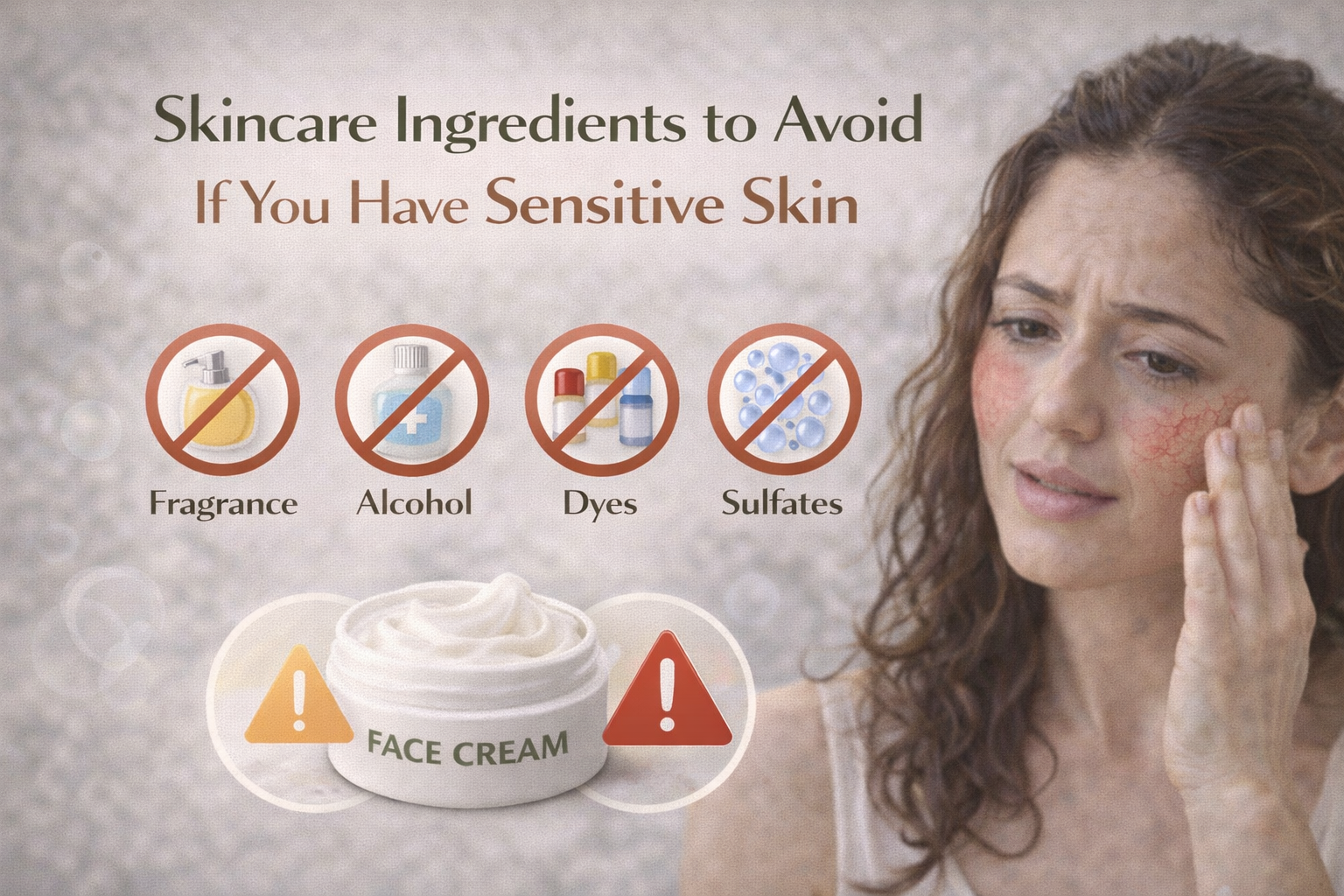
Sensitive skin needs thoughtful care. If your skin reacts easily with redness, itching, burning, or dryness, certain ingredients in everyday skincare products may be the cause. Many people invest in skincare hoping to improve their skin, but without understanding ingredient labels, they may unknowingly worsen sensitivity.
Knowing the right skincare ingredients to avoid is essential for building a routine that protects the skin barrier and keeps your skin calm and healthy. In this blog, we’ll break down the most common irritating ingredients, explain why they cause problems, and share safer alternatives for sensitive skin.
What Is Sensitive Skin?
Sensitive skin is not a permanent skin type but a condition caused by a weakened skin barrier. When the barrier is compromised, moisture escapes easily and irritants penetrate more deeply, leading to discomfort.
Common signs of sensitive skin include:
- Redness or flushing
- Burning or stinging sensations
- Dryness or tightness
- Itchiness
- Reactions to new products
Because sensitive skin reacts quickly, ingredient selection becomes more important than brand claims or packaging.
Why Ingredient Awareness Is Important
Many skincare products contain ingredients designed to improve texture, fragrance, or shelf life. While these ingredients may work well for normal skin, they can be problematic for sensitive skin.
Learning which skincare ingredients to avoid helps you:
- Prevent irritation before it starts
- Strengthen the skin barrier
- Reduce trial-and-error skincare
- Achieve long-term skin comfort
Fragrance and Artificial Perfume
Fragrance is one of the most common irritants in skincare. It is often added to improve scent but provides no real skin benefit.
Why fragrance is problematic:
- Can trigger redness and itching
- Often made of multiple undisclosed chemicals
- Common cause of allergic reactions
Fragrance may be listed as fragrance or parfum on labels.
Safer alternative:
- Fragrance free products
- Minimal formulations designed for sensitive skin
Drying Alcohols
Not all alcohols are bad, but some are especially harsh for sensitive skin.
Alcohols to be cautious of:
- Alcohol denat
- Ethanol
- Isopropyl alcohol
These alcohols can strip natural oils, weaken the skin barrier, and increase dryness.
Safer alternative:
- Fatty alcohols like cetyl alcohol or stearyl alcohol
- Products labeled as alcohol-free for sensitive skin
Harsh Sulfates in Cleansers
Sulfates are cleansing agents commonly found in face washes and cleansers. While effective at removing oil, they can be too aggressive for sensitive skin.
Common sulfates to avoid:
- Sodium lauryl sulfate (SLS)
- Sodium laureth sulfate (SLES)
These can leave skin feeling tight, dry, and irritated.
Safer alternative:
- Sulfate-free cleansers
- Gentle, low-foam formulas
Strong Exfoliating Acids
Exfoliation helps remove dead skin cells, but strong or frequent exfoliation can damage sensitive skin.
Acids that may irritate:
- High strength glycolic acid
- Salicylic acid in frequent use
Overuse can lead to peeling, redness, and sensitivity.
Safer alternative:
- Mild exfoliation used occasionally
- Gentle formulas made for sensitive skin
High-Strength Retinoids
Retinoids are known for improving skin texture and reducing signs of aging, but they can be overwhelming for sensitive skin.
Possible side effects:
- Dryness
- Redness
- Increased sensitivity
Safer alternative:
- Lower strength formulas
- Gradual introduction with proper hydration
Essential Oils
Essential oils are often promoted as natural, but natural does not always mean safe for sensitive skin.
Essential oils that may irritate:
- Peppermint
- Citrus oils
- Eucalyptus
- Tea tree
These can cause stinging or redness, especially in leaves on products.
Safer alternative:
- Products without essential oils
- Simple, calming formulations
Certain Preservatives
Preservatives are necessary to keep products safe, but some types can irritate sensitive skin.
Potential concerns:
- Formaldehyde releasing preservatives
- Strong synthetic preservatives in high amounts
Safer alternative:
- Products designed specifically for sensitive skin
- Balanced preservation systems
Overloaded Formulas With Too Many Actives
Sometimes irritation comes from using too many active ingredients at once rather than one specific ingredient.
Common mistakes:
- Layering multiple actives together
- Using strong treatments daily
- Switching products too often
Sensitive skin benefits from simplicity.
Safer alternative:
- Minimal routines
- Fewer, well-chosen ingredients
How to Identify Skincare Ingredients to Avoid
Reading ingredient labels is one of the most effective skincare habits.
Tips for label reading:
- Focus on the first 5–10 ingredients
- Watch for repeated irritants
- Track products that cause reactions
Over time, this helps you clearly identify which skincare ingredients to avoid for your skin.
Building a Gentle Skincare Routine
A sensitive skin routine should focus on hydration, protection, and barrier repair.
Morning routine essentials:
- Gentle cleanser
- Lightweight moisturizer
- Sun protection
Night routine essentials:
- Mild cleanser
- Hydrating products
- Nourishing face cream
Incroyable Hair Life & Skin Care offers moisturizers and face creams designed to support the skin barrier without unnecessary irritants. Their formulations focus on hydration and comfort, making them suitable for sensitive skin routines when used consistently.
Why Moisturizers Are Crucial for Sensitive Skin
Moisturizers help restore and protect the skin barrier. When skin is properly hydrated, it becomes less reactive and more resilient.
Using a lightweight moisturizer during the day and a richer face cream at night helps reduce dryness and sensitivity triggers. Incroyable Hair Life & Skin Care provides options that support both daytime hydration and night time nourishment without overwhelming sensitive skin.
In addition to hydration, moisturizers play an important role in preventing moisture loss throughout the day. Sensitive skin often lacks the ability to retain water, which leads to tightness, irritation, and discomfort. A well-formulated moisturizer creates a protective layer on the skin, helping lock in hydration and shield it from environmental stressors like pollution and weather changes. With regular use, moisturizers also support long-term skin barrier repair, making the skin stronger, calmer, and better able to tolerate everyday skincare products.
The Importance of Patch Testing
Even gentle products can cause reactions in some individuals.
How to patch test:
- Apply a small amount behind the ear or on the inner arm
Choose an area where the skin is thin and sensitive, as it reacts similarly to facial skin. Apply a small amount of the product and leave it uncovered.
- Wait 24 hours
Avoid washing or applying other products on the test area during this time. This waiting period allows delayed reactions to appear, which are common with sensitive skin.
- Check for redness, itching, or irritation
After 24 hours, observe the area carefully for any signs of discomfort or visible reaction. If you notice redness, burning, itching, or bumps, avoid using the product on your face.
Patch testing helps prevent unwanted reactions on the face.
Lifestyle Factors That Affect Sensitive Skin
Skincare alone cannot fully manage sensitivity.
External factors include:
- Weather changes
- Stress
- Poor sleep
- Dehydration
Supporting your skin through healthy habits enhances the effectiveness of a gentle skincare routine.
When to Seek Professional Help
If your skin continues to react despite avoiding known irritants and following a gentle routine, it may be time to consult a skincare professional. Persistent redness, itching, burning, or flaking can indicate an underlying skin condition such as eczema, rosacea, or a damaged skin barrier. A dermatologist can properly assess your skin, identify triggers, and recommend suitable treatments or products. Seeking professional help early can prevent long-term sensitivity and help you build a routine that supports skin healing, comfort, and overall health more effectively.
Final Thoughts
Understanding skincare ingredients to avoid is essential for anyone with sensitive skin. Fragrance, harsh alcohols, sulfates, strong actives, essential oils, and overly complex formulas are common triggers that can disrupt the skin barrier.
By choosing gentle alternatives, simplifying your routine, and using barrier-supporting moisturizers and face creams, sensitive skin can become calmer, healthier, and more resilient. With patience, consistency, and mindful ingredient choices, sensitive skin doesn’t have to mean problematic skin it can be balanced and comfortable every day.
