
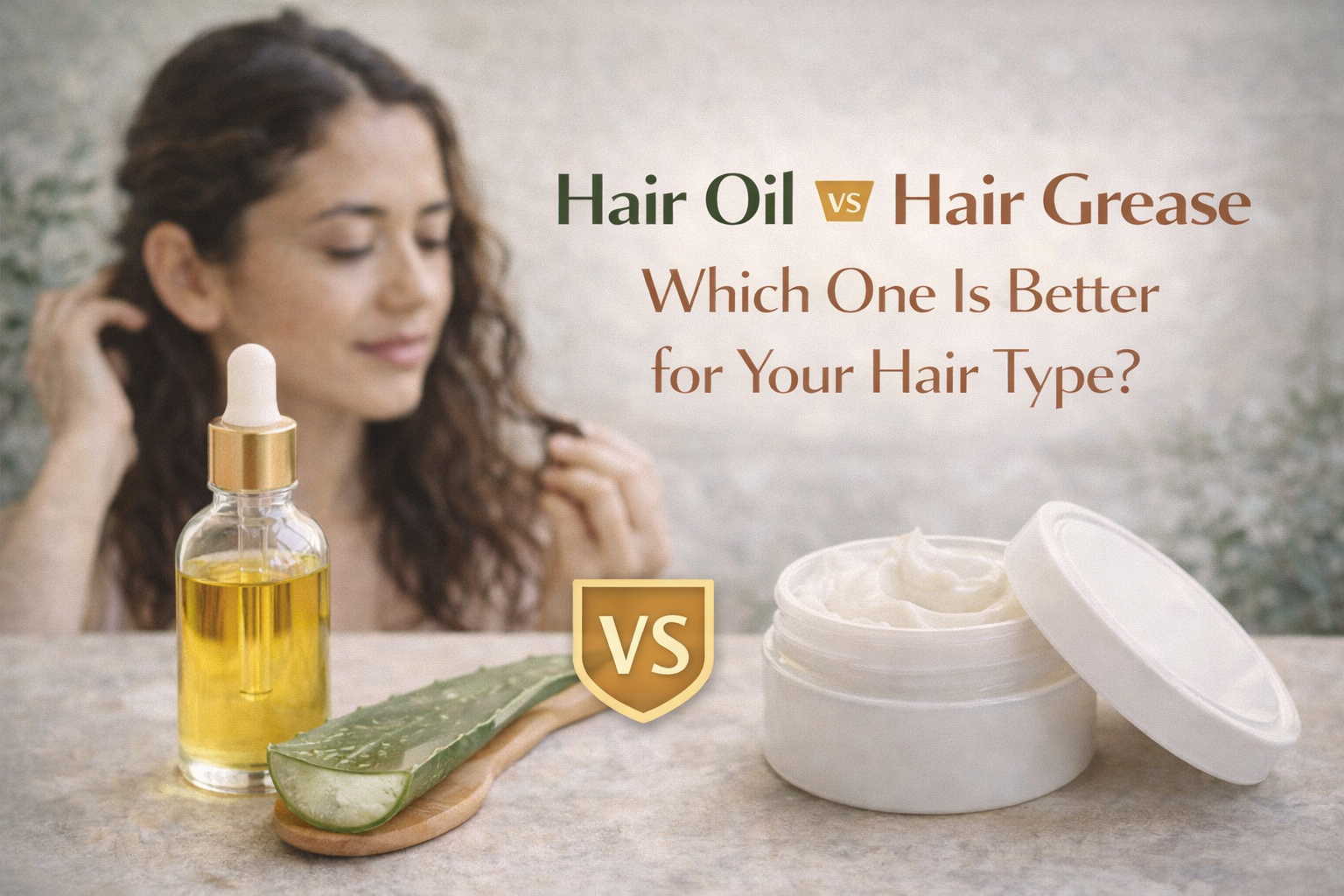
Choosing the right products for your hair can feel overwhelming, especially when long standing options like hair oil and hair grease are both widely recommended. Many people use one out of habit, without fully understanding how it works or whether it truly suits their hair type and goals. While both products aim to improve hair health, they function very differently and deliver distinct results.
Understanding the difference between hair oil vs hair grease can help you make smarter choices for moisture retention, growth support, scalp health, and styling. This guide breaks down how each product works, who should use it, and how to decide which one fits your hair needs best.
Understanding Hair Oil and How It Works
Hair oils are typically made from natural or blended plant-based oils such as coconut, argan, castor, jojoba, or almond oil. Their primary role is to nourish the scalp and hair by penetrating the hair shaft and delivering nutrients.
Oils have a lighter texture and are easily absorbed, which makes them suitable for both scalp care and hair length nourishment. Many oils contain fatty acids, vitamins, and antioxidants that support hair strength, elasticity, and shine.
Hair oils are commonly used to:
- Nourish the scalp
- Improve hair softness and shine
- Support healthy hair growth
- Reduce dryness and breakage
Because oils absorb into the hair, they help strengthen strands from within rather than simply coating the surface.
Understanding Hair Grease and How It Works
Hair grease, also known as pomade or hair balm, is thicker and heavier than oil. It is traditionally petroleum based, though modern formulations may include natural waxes and butters. Hair grease does not penetrate the hair shaft, instead, it sits on top of the hair and scalp, forming a protective barrier.
This barrier helps seal in moisture and prevent water loss, which is why hair grease has long been favored for very dry or coarse hair types. It is especially popular in protective styling routines.
Hair grease is commonly used to:
- Seal in moisture
- Protect hair from dryness
- Reduce friction and breakage
- Support long-lasting styles
Unlike oils, grease focuses more on protection than nourishment.
Hair Oil vs Hair Grease: The Core Differences
The key differences between hair oil vs hair grease lie in texture, absorption, and purpose.
Hair oil:
- Lightweight and absorbent
- Penetrates the hair shaft
- Nourishes scalp and hair
- Ideal for growth focused routines
Hair grease:
- Thick and heavy
- Sits on the surface
- Seals moisture rather than adds it
- Ideal for protection and retention
Neither is inherently better than the other. The best choice depends on your hair type, texture, and goals.
Which Works Best for Different Hair Types
Fine hair
Fine hair is easily weighed down by heavy products. Hair oil is usually the better option, as it provides nourishment without making hair greasy or flat. Lightweight oils applied sparingly to the ends or scalp work best.
Thick hair
Thick hair can tolerate both oil and grease, depending on dryness levels. Oils help with softness and manageability, while small amounts of grease can be used to seal moisture in very dry areas.
Curly and coily hair
Curly and coily hair types often struggle with dryness due to the hair’s structure. Many people benefit from using both oil and grease strategically. Oils nourish the scalp, while grease helps seal moisture in protective styles.
Straight hair
Straight hair usually responds best to hair oils. Grease may make straight hair look heavy or oily unless used very sparingly on the ends.
Chemically treated or colored hair
Hair that has been relaxed, bleached, or colored often needs internal nourishment. Oils help repair and strengthen damaged strands, while grease may be used occasionally to protect fragile areas.
Scalp Health (Oil vs Grease)
Scalp health plays a major role in overall hair condition. Oils are generally better for scalp care because they absorb into the skin, helping deliver nutrients and improve circulation during massage.
Hair grease, on the other hand, can sometimes clog pores if applied directly to the scalp in large amounts. This may lead to buildup or irritation for some people. However, for very dry scalps, a small amount of grease can provide relief when used correctly.
For most routines, oil is the preferred choice for regular scalp care, while grease is best reserved for sealing moisture along the hairline or lengths.
Moisture and Hydration, What’s the Difference?
A common misconception is that hair grease moisturizes hair. In reality, grease seals in moisture but does not add hydration on its own. It works best when applied after water or a hydrating product.
Hair oils can help improve moisture balance by strengthening the hair’s ability to retain water, though they are not hydrating in the same way water based products are.
For best results:
- Use water or a leave-in conditioner for hydration
- Apply oil to nourish
- Use grease sparingly to seal, if needed
This layered approach is especially effective for textured and dry hair types.
Hair Growth Goals and Product Choice
When focusing on growth, nourishing the scalp is essential. Oils are generally more beneficial for growth focused routines because they penetrate the scalp and support follicle health. Massaging oils into the scalp can improve blood flow, which supports healthier hair growth over time.
Grease does not stimulate growth directly, but it can help protect hair length by reducing breakage. Retaining length is just as important as growing new hair, which is why some routines combine both products.
Brands like Incroyable Hair Life & Skin Care formulate their oils to support scalp nourishment and hair strength, making them a valuable addition to growth oriented routines.
Styling and Daily Use Considerations
For daily styling, hair oil is often more versatile. It can be used to tame frizz, add shine, and soften hair without leaving heavy residue. Oils also work well as pre-wash treatments or overnight masks.
Hair grease is better suited for specific styles, such as braids, twists, or cornrows, where long-lasting protection and moisture sealing are needed. It helps reduce friction between strands and keeps styles neat for longer periods.
Using grease daily on loose hair may lead to buildup, especially if hair is not washed regularly.
Can You Use Both Together?
Yes, many people successfully use both products in one routine. The key is understanding their roles.
A common method includes:
- Applying oil to the scalp for nourishment
- Using a light oil on the lengths for softness
- Applying a small amount of grease to seal moisture in protective styles
This balanced approach allows you to benefit from both nourishment and protection without overloading the hair.
When using oils from Incroyable Hair Life & Skin Care, many users find they need less grease overall because the hair stays softer and better nourished.
How to Choose What’s Right for You
When deciding between hair oil vs hair grease, consider these factors:
- Your hair texture and thickness
- Your scalp condition
- Your styling habits
- Your moisture and growth goals
If your hair feels dry but softens quickly with oil, oil may be enough. If your hair loses moisture rapidly and feels rough, a small amount of grease may help seal hydration.
Trial and observation are important. Pay attention to how your hair responds and adjust accordingly.
Common Mistakes to Avoid
Using too much product
Both oil and grease can cause buildup when overused. A little goes a long way.
Applying grease to a dirty scalp
This can trap dirt and lead to irritation. Always start with a clean scalp.
Skipping cleansing
Regular washing ensures your products work effectively and prevents buildup.
Choosing products without understanding ingredients
Not all oils and greases are created equal. Quality matters.
Final Thoughts
The debate around hair oil vs hair grease does not have a one-size-fits-all answer. Each product serves a different purpose, and the best choice depends on your hair type, texture, and goals.
Hair oils nourish, strengthen, and support scalp health, making them ideal for growth and overall hair wellness. Hair grease protects, seals, and reduces moisture loss, making it useful for dry hair and protective styles.
Many people find success by combining both thoughtfully. With well formulated oils, such as those offered by Incroyable Hair Life & Skin Care, you can build a routine that supports healthy hair from the scalp to the ends.
Healthy hair comes from understanding your hair’s needs and choosing products that work with it, not against it.
