

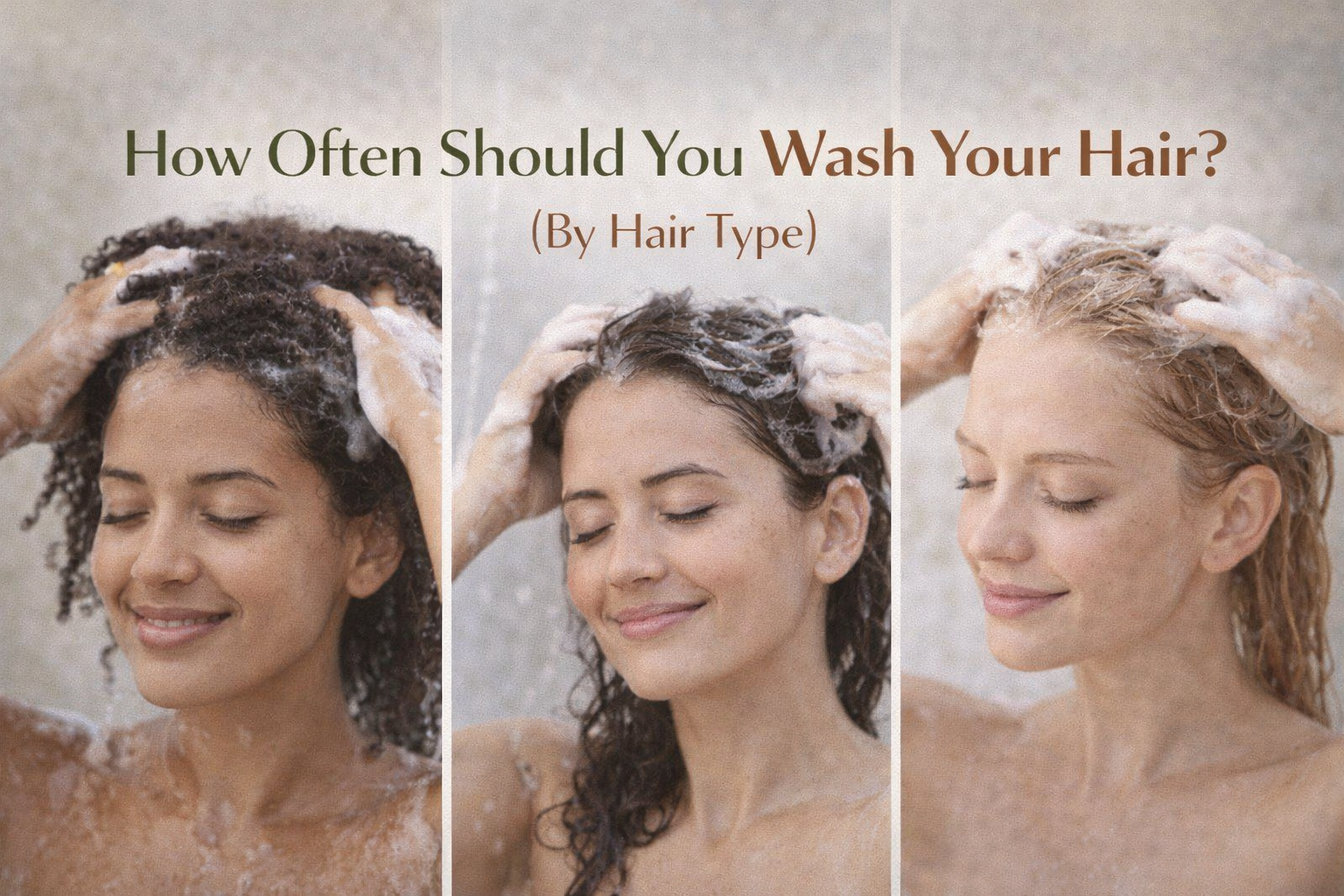
One of the most common and confusing hair care questions is how often you should wash your hair. Advice varies widely, from daily washing to once a week routines, leaving many people unsure of what truly works. The reality is that there is no single rule that applies to everyone. Washing frequency should be based on hair type, scalp condition, lifestyle, and environment.
Washing too often can strip the scalp of natural oils, leading to dryness and breakage. Washing too little can cause buildup, itchiness, and even hair fall. The key is finding a balance that keeps the scalp clean while maintaining moisture and strength in the hair.
This guide explains how often you should wash your hair based on different hair types and textures, helping you build a routine that supports long-term hair health.
Why Hair Washing Frequency Matters
The scalp naturally produces sebum, an oil that protects and moisturizes hair. Shampooing removes excess oil, sweat, dirt, and product residue. When done correctly, washing supports scalp health and creates a healthy environment for hair growth.
Problems arise when washing is either too frequent or too infrequent. Overwashing can lead to dryness, irritation, and increased breakage. Underwashing can clog follicles, slow growth, and cause scalp discomfort.
Understanding how often you should wash your hair begins with recognizing your scalp’s needs and how your hair texture handles oil distribution.
Factors That Influence How Often You Should Wash
Several factors affect how often hair should be washed.
Scalp Type
Scalp type is one of the most important factors. Oily scalps generally require more frequent cleansing, while dry or sensitive scalps need gentler, less frequent washing.
Hair Texture
Hair texture also matters. Straight hair allows oil to travel easily, while curly and coily hair trap oil closer to the scalp, leaving lengths drier.
Lifestyle
Lifestyle plays a role as well. Frequent workouts, sweating, and exposure to pollution may require more regular washing. Product use is another factor, as heavy styling products can cause buildup.
Climate
Climate should also be considered. Hot and humid weather increases sweat and oil production, while colder, drier climates may require less frequent washing.
How Often Should You Wash Straight Hair
Straight hair tends to look oily faster because sebum moves easily down the hair shaft.
For most straight hair types:
- Washing every 1 to 2 days works well,
- Oily scalps may need washing every other day,
- Dry or fine straight hair may wash every 2 to 3 days.
Using a gentle shampoo is essential to avoid triggering excess oil production. Lightweight oils applied only to the ends can help protect hair without making it greasy. Many people prefer light nourishing oils from Incroyable Hair Life & Skin Care to maintain balance without heaviness.
How Often Should You Wash Wavy Hair
Wavy hair often experiences oiliness at the scalp and dryness at the ends, requiring a balanced approach.
For wavy hair:
- Washing every 2 to 3 days is usually ideal,
- Oily scalps may wash every 2 days,
- Dry or treated wavy hair may wash every 3 to 4 days.
Overwashing can disrupt wave definition, while underwashing can lead to limp roots. Light oil use on the ends helps maintain softness without flattening waves.
How Often Should You Wash Curly Hair
Curly hair is naturally drier because oils struggle to travel along the curved strands. Frequent washing can worsen dryness and frizz.
For curly hair:
- Washing every 3 to 5 days works well,
- Very dry curls may wash once a week,
- Co-washing may be used between shampoos if needed.
Gentle shampoos and moisturizing routines are key. Many people with curls use scalp massage and light oils to support scalp health without disturbing curl patterns. Oils from Incroyable Hair Life & Skin Care are commonly included in curly routines to nourish both scalp and hair.
How Often Should You Wash Coily Hair
Coily hair type is the most prone to dryness due to tight curl patterns.
For coily hair:
- Washing every 7 to 10 days is recommended
- Some may wash every 10 to 14 days depending on scalp needs
Moisture retention is the priority. Overwashing can lead to dryness, breakage, and hair fall. Deep conditioning and oil sealing after wash day help maintain softness and strength.
How Often Should You Wash Fine Hair
Fine hair becomes oily quickly and can look flat if not washed regularly, yet it is also fragile.
For fine hair:
- Washing every 1 to 2 days is common
- Some may wash every other day
Lightweight shampoos and minimal oil use are best. Oils should be applied only to the ends to avoid weighing hair down.
How Often Should You Wash Thick Hair
Thick hair usually tolerates less frequent washing because it hides oil buildup better and often retains moisture longer.
For thick hair:
- Washing every 3 to 4 days is typical
- Very dry thick hair may wash once a week
Thick hair benefits from thorough cleansing followed by rich conditioning and moderate oil use to maintain hydration.
How Often Should You Wash Color Treated or Chemically Processed Hair
Chemically treated hair is more fragile and prone to dryness.
For color treated or relaxed hair:
- Washing once or twice a week is ideal
- Use gentle, color safe shampoos
Frequent washing can fade color and weaken strands. Oils help support moisture, strength, and shine between wash days.
Signs You Are Washing Your Hair Too Often
Your hair and scalp will indicate if washing is excessive.
Common signs include:
- Persistent dryness,
- Brittle texture,
- Increased breakage,
- Scalp tightness or irritation.
Reducing wash frequency often restores balance.
Signs You Are Not Washing Your Hair Enough
Underwashing can also cause issues.
Common signs include:
- Itchy or flaky scalp,
- Greasy roots,
- Product buildup,
- Increased shedding.
In these cases, slightly increasing wash frequency can improve scalp health.
The Role of Oils Between Wash Days
Maintaining Moisture Balance
Oils help maintain moisture and scalp comfort between washes. Used correctly, they reduce dryness, support elasticity, and extend time between shampoos.
Supporting Scalp Health
Scalp massage with small amounts of oil or sealing moisture into the ends can be especially helpful. Many routines include oils from Incroyable Hair Life & Skin Care to support healthy hair without buildup.
Gentle oil application can calm the scalp, reduce itchiness, and improve overall comfort until the next wash.
Adjusting Your Routine Over Time
Seasonal and Lifestyle Changes
Hair needs change due to age, hormones, stress, and environment. Seasonal changes also affect washing frequency.
Weather, sweating, and daily activity levels may require changes in wash frequency or product use.
Listening to Your Hair’s Needs
If hair feels dry, oily, or irritated, adjusting your routine helps maintain long-term scalp and hair health.
Reassessing how often you should wash your hair ensures your routine continues to support scalp health and hair strength as conditions change.
Final Thoughts
There is no universal answer to how often you should wash your hair. The best routine depends on your hair type, scalp condition, and lifestyle. Listening to your hair’s response is more effective than following rigid rules.
By choosing a washing schedule that maintains balance, you can prevent dryness, avoid buildup, and support long-term hair health. With the right frequency, gentle cleansing, and supportive oils, healthy hair becomes easier to maintain and enjoy.
