

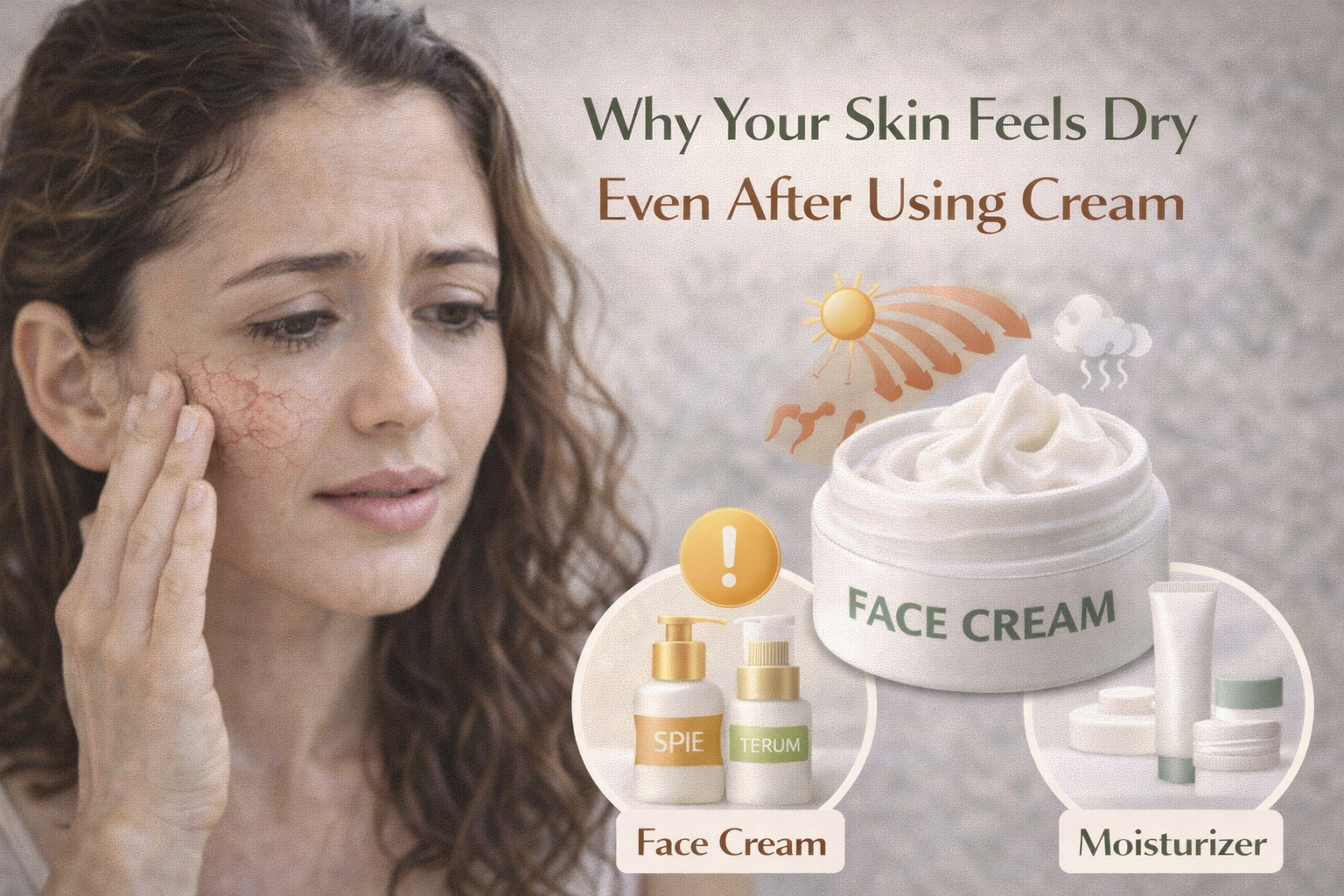
Applying a cream or moisturizer should leave your skin feeling soft, smooth, and comfortable. Yet many people experience an ongoing issue where their skin feels dry after moisturizer, sometimes within minutes or hours of application. This can be frustrating, especially when you’re investing time and money into skincare products.
The truth is, dryness after applying cream doesn’t always mean the product is bad. More often, it’s a result of how the product is formulated, how it’s applied, or what your skin truly needs. In this blog, we’ll explore the most common reasons moisturizers fail, and how you can fix dryness with better application techniques and smarter product choices.
Understanding What Dry Skin Really Means
Dry skin is not just about lack of moisture. It can also involve a weakened skin barrier that allows water to escape too quickly. When this barrier is compromised, even the best cream may not work as expected.
If your skin feels tight, flaky, rough, or uncomfortable after applying cream, it’s a sign that hydration is not being properly locked in. Addressing this requires understanding both your skin type and how moisturizers function.
Using the Wrong Type of Moisturizer
One of the most common reasons skin feels dry after moisturizer is using a formula that doesn’t suit your skin type. Not all moisturizers are created equal.
Lightweight lotions or gel-based moisturizers are great for oily or combination skin, but they may not provide enough nourishment for dry or mature skin. On the other hand, very thick creams may sit on the surface without absorbing properly if your skin needs hydration more than oil.
Choosing the right balance between hydration and nourishment is essential. A well-formulated moisturizer from Incroyable Hair Life & Skin Care is designed to support the skin barrier while maintaining moisture levels, making it suitable for daily use across different skin types.
Applying Cream on Completely Dry Skin
Another overlooked reason moisturizers don’t work effectively is incorrect application timing. Applying cream to completely dry skin reduces its ability to trap moisture.
Moisturizers work best when applied to slightly damp skin, such as right after cleansing or toning. This helps seal in existing moisture and prevents transepidermal water loss. If you wait too long after washing your face, the skin may already start losing hydration, making the cream less effective.
Not Layering Products Correctly
Skincare is not just about individual products, but how they work together. If you apply products in the wrong order, they may not perform as intended.
For example:
- Lightweight hydrating products should go first,
- Moisturizers should come after to seal hydration,
- Rich face creams are best used as the final step, especially at night.
If you skip hydration steps and rely only on a cream, your skin may still feel dry because it lacks water beneath the surface.
Over-Cleansing the Skin
Cleansing too often or using harsh cleansers can strip the skin of its natural oils. This damages the skin barrier and leads to dryness that no cream can fully fix on its own.
If your skin feels dry after moisturizer, evaluate your cleansing routine. Using a gentle, non-stripping cleanser once or twice daily is usually enough. Over cleansing creates a cycle where skin becomes drier, prompting you to apply more cream without solving the root issue.
Environmental Factors That Increase Dryness
Sometimes the issue isn’t your skincare at all, but your environment. Cold weather, dry air, indoor heating, and air conditioning can all pull moisture from your skin.
In such conditions, even regular moisturizer use may not feel sufficient. This is when switching to a richer face cream, especially at night, can help restore moisture levels. Incroyable Hair Life & Skin Care offers nourishing face creams that support overnight repair and help combat environmental dryness without feeling heavy.
Using Too Little or Too Much Product
Quantity matters more than people realize. Using too little moisturizer may not provide adequate coverage, while using too much can prevent proper absorption.
A pea-sized amount is generally enough for the face, adjusted slightly based on texture and skin type. Apply evenly and gently press the product into the skin rather than rubbing aggressively, which can cause irritation and reduce effectiveness.
Ignoring the Skin Barrier
A damaged skin barrier is a major reason skin feels dry after moisturizer. The barrier’s job is to keep moisture in and irritants out. When it’s compromised, water escapes easily, leaving skin dry despite regular cream use.
Signs of a weakened barrier include redness, sensitivity, tightness, and persistent dryness. Supporting the barrier requires consistent hydration, gentle products, and avoiding overuse of exfoliants or harsh treatments.
Overusing Active Ingredients
Active ingredients can be beneficial, but overuse can backfire. Excessive exfoliation or frequent use of strong treatments can disrupt the skin barrier and lead to dryness.
If you notice dryness after introducing new activities, reduce their frequency and focus on hydration and barrier repair. Night time is usually the best time for activities, followed by a nourishing face cream to support recovery.
Seasonal Changes and Skin Needs
Your skin’s needs change with the seasons, but many people don’t adjust their skincare accordingly. A moisturizer that works well in summer may not be enough in winter.
During colder months, switching to a richer cream at night and layering products more thoughtfully can help prevent dryness. Listening to your skin and adapting your routine is key to long-term comfort and health.
Creating a Routine That Truly Fixes Dryness
Fixing skin dryness is not about using more products, but about using the right products in the right way. A well-structured routine helps restore moisture, strengthen the skin barrier, and prevent dryness from returning. By focusing on proper application and hydration focused product choices, you can significantly improve how your skin looks and feels over time.
How to Fix Dryness the Right Way
If your skin feels dry after moisturizer, here are practical steps to fix the issue:
- Apply moisturizer on slightly damp skin,
- Use gentle cleansers that don’t strip oils,
- Choose products suited to your skin type,
- Layer hydration before sealing with cream,
- Adjust products seasonally,
- Avoid overusing harsh actives.
Consistency and correct technique often make a bigger difference than switching products frequently.
Building a Hydration Focused Routine
A well rounded routine focuses on both hydration and protection. During the day, a lightweight moisturizer helps maintain moisture without heaviness. At night, a richer face cream supports repair and replenishment.
Incroyable Hair Life & Skin Care formulates both moisturizers and face creams to work with the skin’s natural rhythm, offering hydration during the day and nourishment at night. Used consistently, the right combination can significantly reduce dryness and improve overall skin comfort.
When to Seek Professional Advice
If dryness persists despite adjusting products and habits, it may be worth consulting a skincare professional. Chronic dryness can sometimes be linked to underlying skin conditions or lifestyle factors that require targeted care.
Final Thoughts
If your skin feels dry after moisturizer, it’s not a failure on your part or the product alone. More often, it’s a sign that your skin needs a better balance of hydration, nourishment, and protection.
By choosing the right products, applying them correctly, and supporting your skin barrier, you can transform your skincare results. With thoughtful formulations and consistent care, dryness doesn’t have to be a constant struggle.
Healthy, comfortable skin starts with understanding what it truly needs and giving it the right support, every day and night.
