

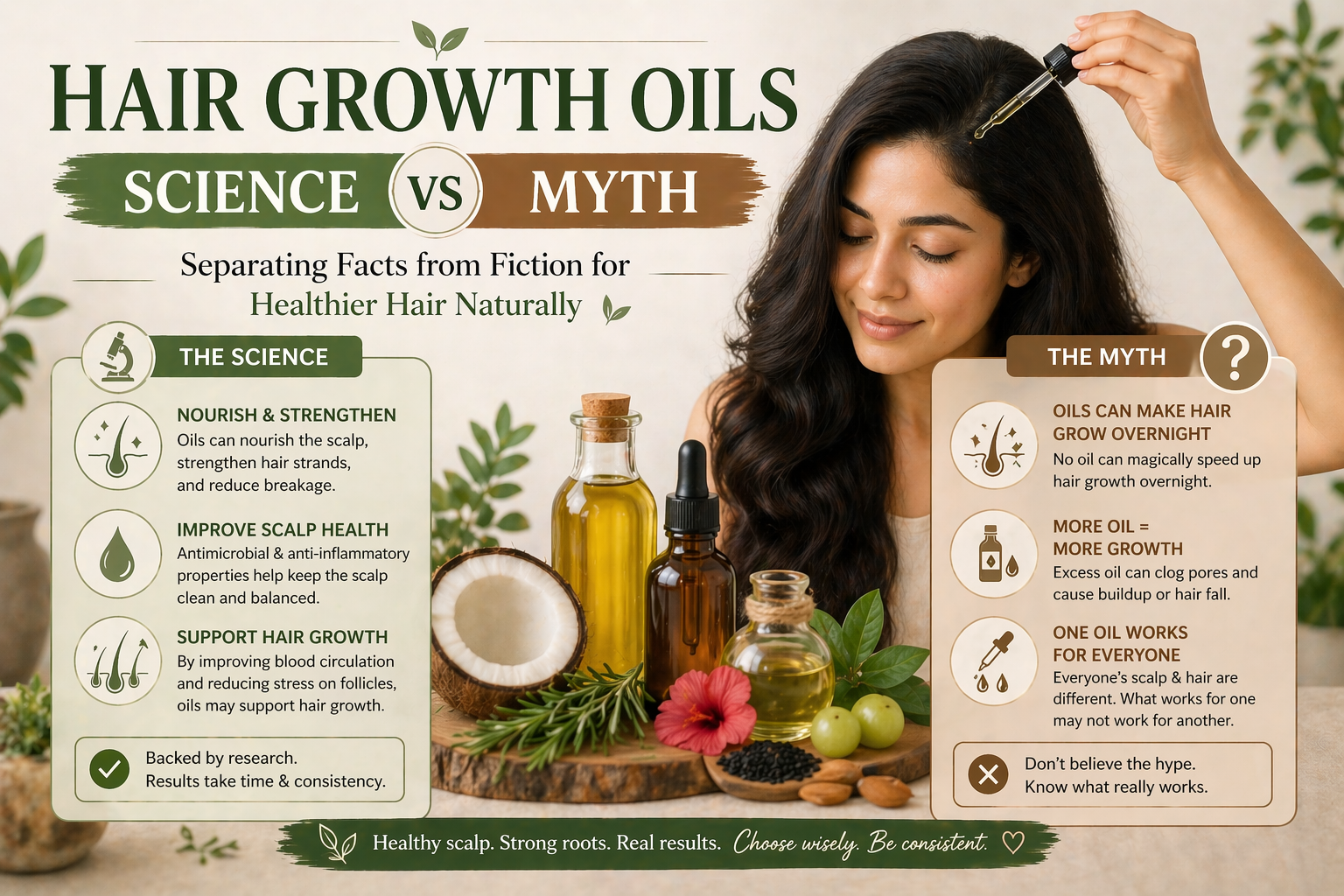
Hair oils have been used for centuries as a trusted solution for stronger, longer, and healthier hair. From traditional coconut oil massages to modern herbal blends, oiling is deeply rooted in hair care routines. However, with so much information online, it has become difficult to separate fact from fiction.
Do hair oils really promote hair growth, or is it just a myth?
The truth lies somewhere in between. Hair oils do not magically change your genetic growth rate, but they play a powerful role in improving scalp health and preventing damage, both of which are essential for achieving longer hair over time.
In this in-depth guide, we will break down the science behind hair growth oils, analyze the most popular oils like coconut, rosemary, and carrot oil, and help you understand what actually works.
Understanding the Science of Hair Growth
Before evaluating oils, it is important to understand how hair growth works at a biological level.
The Hair Growth Cycle
Hair grows from follicles located beneath the scalp and follows a natural cycle:
Anagen (Growth Phase): This is the active growth phase, lasting between 2 to 7 years. The longer this phase, the longer your hair can grow.
Catagen (Transition Phase): A short phase where growth slows and the follicle shrinks.
Telogen (Resting Phase): Hair rests and eventually sheds, making way for new hair.
On average, hair grows about half an inch per month. This rate is largely determined by genetics, hormones, and overall health.
Where Hair Oils Fit In
A natural hair growth oil does not directly speed up this cycle. Instead, it improves the conditions required for healthy growth by:
- Nourishing the scalp
- Strengthening hair roots
- Reducing hair breakage
- Improving blood circulation
This means oils support growth indirectly by helping your hair grow stronger and stay intact.
Science vs Myth
There are several common misconceptions about hair oils that need to be clarified.
Myth 1 – Oils Instantly Boost Hair Growth
Hair oils cannot make hair grow faster overnight. Hair growth is slow and natural. Oils only help by keeping the scalp healthy. You need patience to see results.
Myth 2 – More Oil Means Better Results
Too much oil can harm your scalp. It can block hair follicles. Dirt and buildup may cause dandruff or irritation. Using a small amount works best.
Myth 3 – All Oils Work the Same
Every oil is different. They have unique nutrients and fatty acids. This means they work in different ways. Picking the right oil or blend is important.
Understanding these differences is essential when choosing the best hair growth oils.
Coconut Oil
Coconut oil is one of the most researched and widely used hair oils.
Scientific Evidence
Studies show that coconut oil penetrates the hair shaft better than many other oils due to its low molecular weight. It reduces protein loss, which is crucial for maintaining strong hair.
Key Benefits
- Prevents hair breakage
- Deeply nourishes strands
- Protects against damage
Growth Impact
While it does not directly stimulate growth, it helps retain length by reducing hair damage. This makes it one of the best hair growth oils for long-term results.
Rosemary Oil
Rosemary oil has gained popularity due to its strong scientific support.
Clinical Study
A study comparing rosemary oil with minoxidil found that both produced similar improvements in hair growth after six months.
How It Works
- Stimulates blood circulation in the scalp
- Encourages hair follicle activity
- Reduces inflammation
Why It Matters
Rosemary oil is one of the few oils that shows real potential in supporting hair regrowth, making it an excellent addition to any natural hair growth oil routine.
Carrot Oil
Carrot oil for hair growth is often overlooked, but it provides valuable nutrients.
Nutritional Composition
- Beta-carotene (Vitamin A)
- Vitamin E
- Antioxidants
Benefits for Hair
- Nourishes the scalp
- Strengthens hair roots
- Improves hair texture
Scientific Perspective
Vitamin A supports cell growth and scalp health. However, excessive use can lead to negative effects, so balanced use is important.
Castor Oil
Castor oil is known for its thick texture and moisturizing properties.
Key Component
Ricinoleic acid, which may help improve blood circulation and reduce inflammation.
Benefits
- Deep hydration
- Stronger hair roots
- Reduced hair fall
Effectiveness
Although direct scientific evidence for growth is limited, its ability to improve hair strength makes it highly beneficial.
Argan Oil
Argan oil is rich in essential fatty acids and antioxidants.
Benefits
- Repairs damaged hair
- Adds shine and smoothness
- Protects against environmental damage
Role in Growth
It supports growth indirectly by preventing breakage and maintaining healthy hair.
Scalp Oil Benefits That Matter
Healthy hair begins with a healthy scalp.
Importance of Scalp Health
Hair follicles depend on a well-nourished scalp to function effectively.
Key Scalp Oil Benefits
- Improved blood circulation
- Reduced dryness and dandruff
- Stronger follicles
- Balanced scalp environment
Regular oiling combined with massage enhances these benefits significantly.
Which Oils Actually Help Hair Growth?
Some oils have stronger support from science. Rosemary oil is one of them. It helps improve blood circulation in the scalp. It also supports healthy hair follicles.
Other oils work in a different way. Coconut oil, castor oil, carrot oil for hair growth, and argan oil do not directly increase growth speed. They make hair stronger. They reduce breakage. They also nourish the scalp.
That is why blends work better. The best hair growth oils combine multiple ingredients. They give complete care to the scalp and hair. Brands like Incroyable Hair Life & Skin Care focus on such balanced formulas.
Consistency is also very important. Oils need time to show results. Regular use improves scalp health slowly. With proper care, hair becomes stronger and healthier over time.
How to Use Hair Oils Correctly
Using oil properly is essential for achieving results.
Application Steps
- Apply oil directly to the scalp
- Massage gently for 5–10 minutes
- Leave it on for at least 30 minutes
- Wash with a mild shampoo
Frequency
Using oil 2–3 times per week is sufficient.
Consistency is key when using any natural hair growth oil.
Common Mistakes to Avoid
Many people fail to see results due to simple mistakes.
Over oiling is one of the most common issues. Applying too much oil can clog hair follicles. This can lead to dandruff and scalp irritation.
Using low quality products can also harm your hair. Cheap oils often contain artificial ingredients or fillers. These can damage the scalp instead of nourishing it.
Expecting instant results is another mistake. Hair growth is a slow process. It requires patience and consistent care over time.
Ignoring your diet can stop progress completely. Hair needs proper nutrients to grow. Without good nutrition, even the best oils will not work effectively.
The Role of Diet in Hair Growth
External care alone is not enough.
Essential Nutrients
- Protein
- Iron
- Biotin
- Omega-3 fatty acids
Without these, even the best hair growth oils will not deliver optimal results.
Why Oil Blends Work Better
Single oils provide limited benefits, while blends offer a complete solution.
Benefits of Blends
Blends combine different oils to give multiple nutrients. They provide vitamins, fatty acids, and antioxidants all at once. This keeps both hair and scalp healthy.
When oils are mixed, they penetrate the scalp and hair better. This helps the nutrients reach hair follicles more effectively. Improved absorption means better results over time.
Oil blends can do many things at once. They strengthen hair, reduce breakage, and nourish the scalp. Using a blend gives you multiple benefits in one application.
This is why many users trust Incroyable Hair Life & Skin Care, as their products combine multiple effective oils into one powerful formula.
How Long Does It Take to See Results?
Hair growth is a gradual process.
Expected Timeline
- 2–4 weeks: Improved texture
- 4–8 weeks: Reduced hair fall
- 3–6 months: Noticeable length retention
Consistency is the most important factor.
Final Verdict
What is the truth?
Oils improve scalp health. They nourish the scalp with essential nutrients. A healthy scalp allows hair follicles to work properly.
They reduce breakage. Oils strengthen the hair shaft and prevent split ends. This helps hair stay longer and look fuller.
They support better growth conditions. Oils keep follicles healthy and reduce inflammation. This creates the best environment for natural hair growth.
What is the lie?
Oils alone cannot drastically speed up growth. No oil can change your natural hair growth rate. They only support healthier hair, but the actual speed is determined by genetics and overall health.
One oil does not work for everyone. Different hair types and scalp conditions respond differently to oils. Using a single oil for all needs may not provide complete benefits.
Results are not immediate. Hair growth takes time, often several months to show visible improvement. Patience and regular care are essential for any noticeable change.
Conclusion
Hair growth oils are not miracle products, but they are highly effective when used correctly.
Ingredients like coconut, rosemary, and carrot oil for hair growth each offer unique advantages. When combined properly, they create a powerful solution for healthier, stronger hair.
For those looking for a reliable option, Incroyable Hair Life & Skin Care provides carefully formulated oil blends designed to support both scalp health and hair strength.
In the end, achieving long and healthy hair is not about quick fixes. It is about consistency, proper care, and understanding what truly works.
Focus on science, avoid myths, and build a routine that delivers real results.