
Hair washing looks simple, yet it’s one of the most misunderstood steps in hair care. Many people use expensive shampoos and conditioners but still complain about dull hair, dryness, frizz, or lack of shine. In most cases, the issue is not the product quality, it’s how and in what order the products are used.
One of the most searched hair care questions today is shampoo or conditioner first. This confusion can quietly affect your hair’s health, texture, and shine over time.
At Incroyable Hair Life & Skin Care, we believe that hair results depend as much on the correct routine as on the products themselves. In this detailed guide, we’ll clearly explain the correct hair washing order, why it matters, and how it directly impacts hair health and shine.
Understanding the Purpose of Shampoo and Conditioner
Before discussing the correct order, it’s important to understand what each product actually does.
What Shampoo Does
Shampoo is designed to cleanse the scalp and hair by removing:
- Excess oil (sebum),
- Sweat and dirt,
- Pollution particles,
- Product build-up from styling products.
Shampoo focuses mainly on the scalp, because healthy hair growth starts there.
What Conditioner Does
A conditioner is not a cleanser. Its role is to:
- Restore moisture lost during washing,
- Smooth the hair cuticle,
- Reduce friction and tangling,
- Improve softness, manageability, and shine,
- Protect hair from breakage.
The conditioner mainly works on the hair lengths and ends, not the scalp.
Because their functions are completely different, using them in the wrong order reduces their effectiveness.
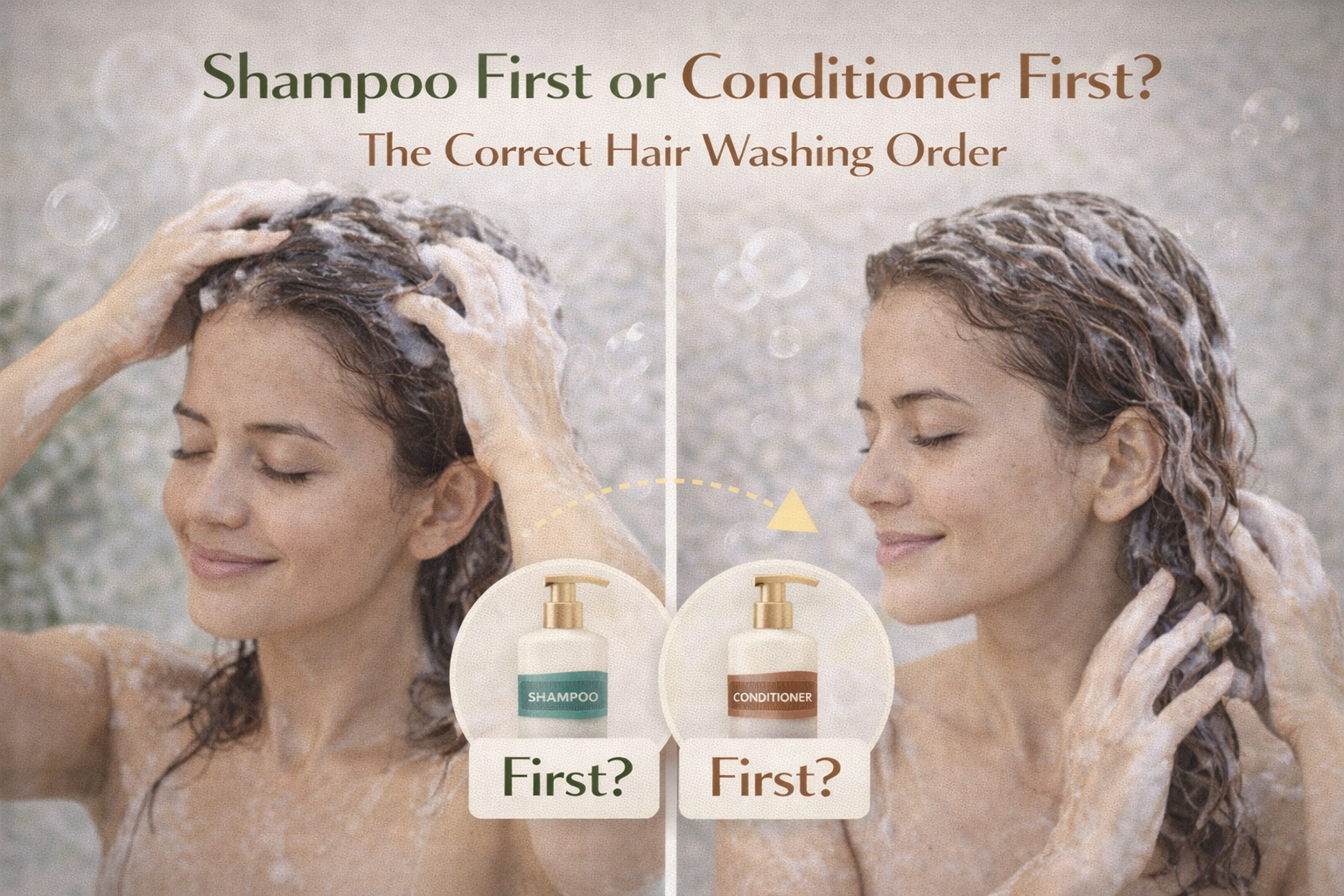
Shampoo or Conditioner First
The correct and recommended hair washing order is:
- Shampoo first to cleanse the scalp and remove oil, dirt, and product buildup. This step prepares the hair by slightly opening the cuticle and creating a clean base.
- Conditioner second to restore moisture, smooth the cuticle, and protect the hair lengths from dryness and breakage.
This order allows each product to perform its job properly.
When hair is cleansed first, conditioner can penetrate clean strands, seal moisture, and smooth the cuticle. Reversing the order often leads to buildup, greasy roots, and dull looking hair.
So if you’re wondering about shampoo or conditioner first, the answer for most hair types is always shampoo first.
Why Shampoo Should Always Come First
Using shampoo before conditioner is not just a habit, it’s backed by hair science.
Key Reasons Shampoo Comes First
- Removes build-up that blocks moisture absorption,
- Opens the cuticle slightly, allowing conditioner to work better,
- Cleans the scalp, supporting healthier follicles,
- Prevents product residue that weighs hair down.
If conditioner is applied first, it coats the hair with a layer that shampoo may not fully remove. This can prevent proper cleansing and lead to limp, oily hair.
What Happens If You Use a Conditioner Before Shampoo?
Some people try reverse washing, where conditioner is applied before shampoo. While this method has specific uses, it’s not ideal for most people.
Problems with Conditioning First
- Hair may feel heavy or flat,
- Shampoo may not cleanse properly,
- Product residue can build up over time,
- Hair may lose volume and shine.
When Reverse Washing May Work
- Very fine hair that gets weighed down easily
- Extremely oily hair
Even in these cases, reverse washing should not replace a regular shampoo first routine.
How the Correct Order Improves Hair Health
Using the correct washing order has long-term benefits for hair strength and condition.
Health Benefits of Shampoo First
- Cleaner scalp = healthier follicles,
- Reduced breakage due to smoother cuticles,
- Better moisture balance,
- Improved elasticity and strength.
When conditioner is applied to clean hair, it repairs surface damage and protects strands from daily wear and tear.
Incorrect order can lead to dryness, increased breakage, and weakened hair over time.
How the Correct Order Enhances Hair Shine
Hair shine depends on how smooth the hair cuticle is.
Shampoo + Conditioner = Shine Formula
- Shampoo removes dulling residue,
- Conditioner smooths and seals the cuticle,
- Smooth cuticles reflect light evenly.
When the conditioner is trapped under dirt or oil due to wrong order, it cannot smooth the cuticle properly. This results in:
- Frizz,
- Dullness,
- Uneven texture.
Correct order alone can significantly improve shine without extra products.
Step-by-Step: How to Wash Hair the Right Way
Follow this simple routine for best results:
Step 1: Wet Hair Properly
- Use lukewarm water
- Ensure hair is fully saturated
Step 2: Apply Shampoo
- Apply to the scalp, not the lengths,
- Massage gently with fingertips,
- Avoid scratching with nails.
Step 3: Rinse Thoroughly
- Make sure no shampoo residue remains
Step 4: Apply Conditioner
- Focus on mid-lengths and ends,
- Avoid the scalp unless product says otherwise,
- Leave on for 1–3 minutes.
Step 5: Final Rinse
- Use cool or lukewarm water,
- Helps seal the cuticle and boost shine.
Choosing the Right Products Matters Too
Correct order works best with well formulated products.
What to Look For
- Gentle, sulfate-free shampoos,
- Lightweight yet nourishing conditioners,
- Products suited to your hair type.
Hair care solutions from Incroyable Hair Life & Skin Care are designed to cleanse without stripping and condition without heaviness, making them ideal when used in the correct order.
How Often Should You Shampoo and Condition?
Hair washing frequency depends on scalp type:
- Oily scalp: every 2–3 days
- Normal hair: every 3–4 days
- Dry or curly hair: every 5–7 days
Conditioners should be used every time you shampoo to restore moisture and protect hair strands.
Skipping conditioner can lead to dryness, frizz, and breakage even if your scalp is oily.
Common Hair Washing Mistakes to Avoid
Avoid these habits to maintain hair health:
- Using too much shampoo,
- Applying conditioner on the scalp,
- Rinsing conditioner too quickly,
- Using very hot water,
- Rough towel drying.
Small changes in technique can make a big difference in hair quality.
Are There Any Exceptions to Conditioners First?
While the standard and most effective routine is always shampoo first, conditioner second, there are rare cases where some people may benefit from using conditioner before shampoo, a method often called reverse washing.
When Reverse Washing Can Work
- Fine or thin hair: Using conditioner first can add a light layer of moisture without weighing hair down, making it feel softer and less limp after washing.
- Overly dry ends with oily roots: Applying conditioner to the mid-lengths and ends first can protect fragile strands during shampooing
. - Occasional volume boost: For hair that gets very flat or lacks body, reverse washing can sometimes help create extra lift at the roots.
Why It’s Not the Default Approach
Even in these cases, conditioner first washing should be done sparingly. Shampoo may not remove all conditioner residue, which can leave hair greasy or dull if done regularly. For most hair types, especially curly, thick, or color treated hair, following the traditional shampoo first, conditioner second order ensures optimal cleansing, hydration, and shine.
Pro Tip: If you try reverse washing, focus the conditioner only on the ends and always follow with a gentle shampoo. This allows you to enjoy the benefits without risking buildup or reduced scalp health.
Final Thoughts
Understanding whether to use shampoo or conditioner first may seem simple, but it makes a significant difference in hair health and shine. Shampoo should always come first to thoroughly cleanse the scalp, remove buildup, and prepare the hair for nourishment. Following with conditioner helps restore moisture, smooth the cuticle, and protect hair from breakage, leaving it soft, manageable, and naturally shiny.
Using the correct order consistently ensures that each product works effectively and that your hair maintains strength, resilience, and luster. By adopting this simple yet essential routine, along with high-quality products like those from Incroyable Hair Life & Skin Care, you can achieve healthier, stronger, and more radiant hair over time.